
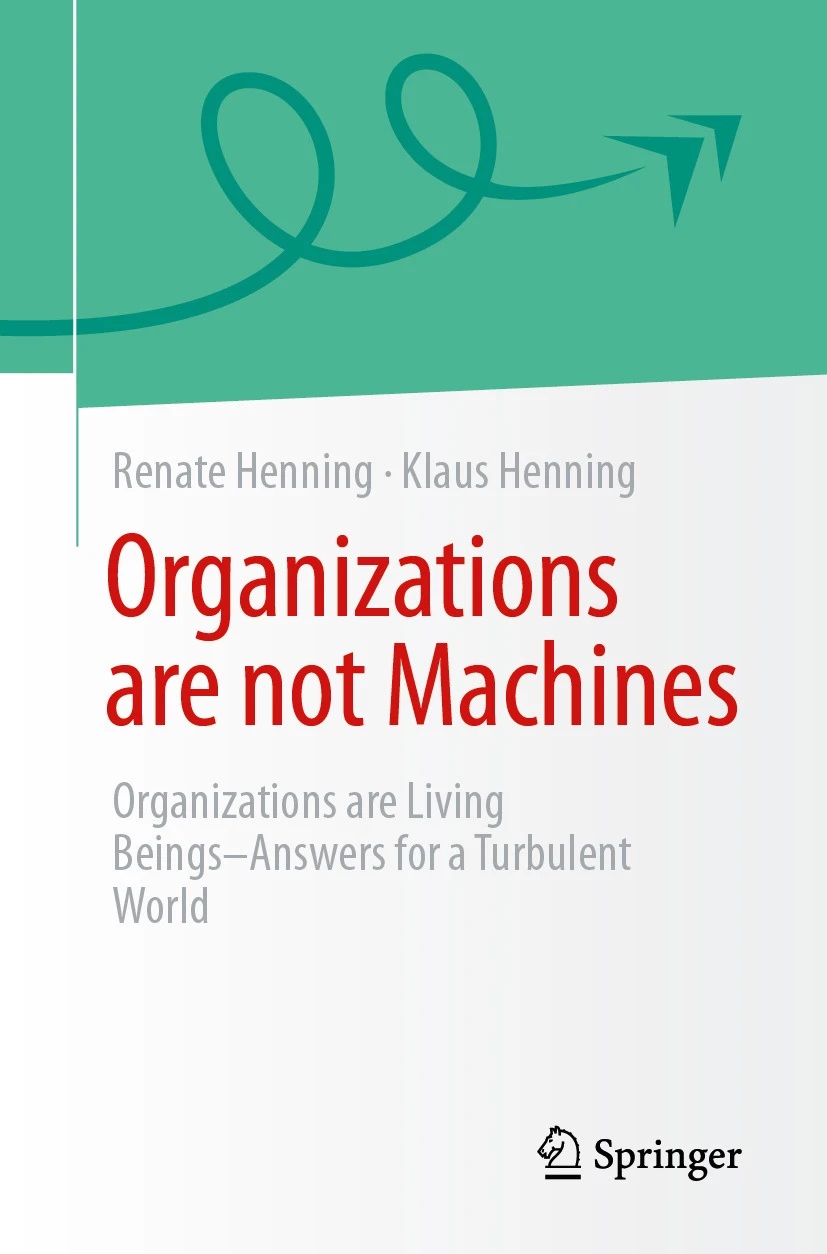
Organizations are not Machines
Growing complexity and dynamism characterize our world—and most organizations within it. The aim of this book is to foster a better understanding of the resulting turbulence and to provide ways to master it. It demonstrates that organizations are not machines but should instead be understood and managed as living entities. The authors describe how this systemic mindset has emerged across many disciplines since the mid-1940s, linking a cybernetic approach with concepts from biology, sociology, psychology, technology, and chaos theory.
We were captivated the moment we first encountered the OSTO approach in the mid-1980s. From that point on, we began to view organizations as living entities—as sociological units—rather than as static, militaristic structures. At the time, this was a completely new perspective for us.
Viewing the organization as a living entity—one capable of change rather than being locked into predetermined patterns—offers an opportunity for people within organizations to navigate and succeed in an increasingly turbulent world.
More book titles…
…of Renate and Klaus Henning you can find on the page „Christian Background“
“Kunst der kleinen Lösung – Wie Menschen und Unternehmen die Komplexität meistern”
Klaus Henning
“Die Egofalle – 7 Möglichkeiten, Ihr Geschäft zu ruinieren”
Renate Henning
“Spuren im Chaos – Christliche Orientierungspunkte in einer komplexen Welt”
Klaus Henning
Weitere Buchtitel…
…finden Sie auf den Seiten:
„Unsere Zukunft mit Künstlicher Intelligenz“
„Christlicher Hintergrund“